

Bulky waste collection problems N7 and how to avoid
Posted on 08/07/2026

Bulky waste sounds simple until you're stood in a hallway with a sofa that won't fit the stairwell, a mattress that has been dragged out twice already, and a collection slot that now feels inconveniently close. In N7, where terraces, flats, managed blocks and tight streets all sit side by side, bulky waste collection can become a proper headache. The good news? Most of the problems are avoidable once you understand where things usually go wrong, what local access issues look like in practice, and how to prepare before anyone lifts a finger.
This guide breaks down bulky waste collection problems in N7 and how to avoid them in a practical, no-nonsense way. You'll learn what tends to delay collections, how to reduce surprise costs, what to check before booking, and when a cleaner, simpler disposal route makes more sense. Let's face it, nobody wants to pay for a wasted trip because a wardrobe was measured in hope rather than reality.
Why bulky waste collection problems in N7 matter
Bulky waste is not just "a bit of extra rubbish". It often includes items that are awkward, heavy, awkward again, and expensive to move badly. In N7, those problems are amplified by the area's housing mix: older buildings, narrow staircases, shared entrances, parking restrictions, and limited place to stage items outside. If a collection is misplanned, the result can be missed slots, extra labour, damage to walls or lifts, neighbour complaints, and sometimes an item being left behind completely.
There's also the practical side. A failed collection can disrupt a move, delay a flat clear-out, or leave a landlord or tenant stuck with clutter in a communal area. If you're trying to free up space fast, that delay can feel oddly stressful. A pile of broken furniture in a hallway has a way of making a home feel unfinished, even if everything else is under control.
And then there's the money angle. Avoidable issues often lead to avoidable charges. One of the easiest ways to spend more than necessary is to book a bulky waste pickup without checking access, item size, or what the provider expects from you beforehand. For many people, reading up on how hidden rubbish removal charges happen in Islington is a useful starting point, because the same patterns tend to show up in N7 too.
Expert summary: Most bulky waste collection problems in N7 are not caused by the waste itself. They happen because access, timing, item preparation, or disposal expectations were unclear from the start.
How bulky waste collection works in N7
At its simplest, bulky waste collection is the removal of large household or commercial items that are too big for normal bins. That might include sofas, beds, wardrobes, desks, appliances, shelving, broken gym equipment, and other oversized items. In a place like N7, the actual process depends on the route you choose.
Some people use a council collection or arranged local pickup. Others use a private waste clearance service that can take mixed bulky items, lift from inside the property, and clear the space in one visit. Both can work well, but they suit different situations. The key is knowing what kind of collection you really need, rather than assuming every provider handles bulky waste the same way. They don't.
In practice, a smooth collection usually follows a simple pattern:
- You identify the items and check whether they are reusable, recyclable, or must go as waste.
- You measure the biggest items and note access points such as lifts, stairwells, gates, or parking restrictions.
- You confirm the collection type: roadside pickup, from inside the property, or full clearance.
- You agree the time slot and make sure someone can provide access if needed.
- The items are removed, sorted, and taken to the appropriate waste stream or facility.
The problems begin when one of these steps is skipped. A wardrobe that looked manageable in a bedroom can turn into a very different story once it reaches a narrow landing. A fridge might technically be "one item", but if it is built-in or difficult to disconnect, that changes the job. A quick chat before the booking often saves a lot of awkwardness later. Honest, that's usually the whole trick.
If you want a broader view of how local rubbish removal services tend to be arranged around the borough, the article on same-day rubbish collection in N1 and N1C gives a useful picture of urgency, timing and what customers often overlook.
Key benefits and practical advantages
When bulky waste collection is planned properly, it does more than just remove old furniture. It clears space, reduces stress, and helps you avoid making the job bigger than it needs to be. That sounds obvious, but in real life a good collection is often the difference between a tidy, manageable project and a weekend that disappears into a van of broken flat-pack.
Here are the main advantages of doing it properly:
- Less disruption: Items are removed in one go, rather than sitting in the hallway for days.
- Lower risk of damage: A planned route through the property helps protect walls, doors and flooring.
- Better cost control: Accurate item descriptions reduce the chance of add-on fees.
- Cleaner sorting: Reusable or recyclable items are easier to separate when you know what is being collected.
- Fewer neighbour issues: In shared buildings, a quick and tidy removal avoids complaints about blocked entrances or eyesore waste.
- Less back-and-forth: One correct booking is better than three confused attempts.
There's also a less obvious benefit: mental space. A room cleared of a broken sofa or an old mattress feels lighter. You notice the echo a bit, the light falls differently, and suddenly the room looks usable again. That matters more than people sometimes admit.
| Collection approach | Best for | Typical strengths | Common pitfalls |
|---|---|---|---|
| Council bulky waste booking | Single items, non-urgent jobs | Can be straightforward if the item and access fit the rules | Limited item types, waiting times, strict preparation rules |
| Private bulky waste collection | Multiple items, difficult access, faster turnaround | More flexible, often includes lifting from inside | Costs can rise if details are vague |
| DIY disposal | Very small loads with suitable transport | Direct control over timing | Heavy lifting, parking issues, unloading effort, disposal uncertainty |
Who this is for and when it makes sense
Bulky waste collection in N7 is relevant to far more people than you might think. It is not just for landlords or people moving house. A lot of residents need it after a room refit, a tenancy changeover, a bereavement, a loft tidy-up, or a furniture replacement that happened faster than the old item could be dealt with.
This is especially useful if you are:
- Moving out of a flat and need a quick clear-out.
- Replacing furniture and have no storage space for the old pieces.
- Managing a rental property and want the place ready for the next occupant.
- Clearing a loft, basement or spare room that has become a bit of everything storage.
- Dealing with bulky office furniture or stock from a small business unit.
- Living in a block where communal areas must be kept clear and safe.
It makes sense when the item is too large for normal disposal, when you do not want to hire a vehicle, or when lifting it yourself would be a nuisance or a risk. To be fair, plenty of people start with "I'll just do it myself", then realise the sofa does not fit through the door the way they hoped. That moment is usually educational.
It also makes sense if timing matters. For example, if you are preparing a property for viewings, arranging work around a tenancy end date, or trying to clear an access route before decorators arrive, waiting around is not ideal. In those cases, a more flexible collection arrangement is often worth it.
Step-by-step guidance
If you want to avoid bulky waste collection problems in N7, start here. This is the part that saves time later.
- List every item. Write down what is going. Include the awkward little things too, such as broken office chairs, side tables, drawer units, or a disassembled bed frame.
- Measure the largest pieces. Not just the item itself, but its route out of the property. Door width, hallway corners, stair turns, lift size, and outside access all matter.
- Check item condition. Some providers can take broken, dismantled, or incomplete items, while others need clear details before they can confirm the job.
- Identify access issues. Are there resident permits, coded gates, loading restrictions, narrow pavements, or no convenient stopping place? Mention it early.
- Separate what can be reused or recycled. If something is still usable, say so. This can influence the disposal route and sometimes the cost.
- Choose the right service level. If you need lifting from inside, stair carries, or mixed items, make sure the collection is set up for that.
- Book a realistic time slot. If you need to be at work, or the lift access is only available at certain times, say so upfront.
- Prepare the space. Clear a path to the item, remove small loose pieces, and make sure pets, children, and vulnerable residents are kept away from the route.
- Confirm the details. One last check on what is being collected, who is providing access, and whether anything needs to be disconnected first.
A tiny bit of planning goes a long way. The jobs that run smoothly are rarely the ones where everything was left to chance. They are the ones where somebody measured twice and booked once.
Expert tips for better results
Here's where local experience really helps. N7 has plenty of older housing stock, mixed-use streets and busy local access patterns, so the "normal" way of doing things is not always the best way.
1) Describe the access, not just the item. A collection team does not only need to know "one wardrobe". They need to know whether it is on the third floor, whether there is a lift, and whether there is anywhere to stop outside without causing a scene.
2) Be honest about condition. If a bed has already been partly dismantled, say so. If a sofa is soaked, broken, or infested with springs sticking out, say that too. It matters for handling, safety and disposal.
3) Keep the route clear. Sounds basic, but it saves hassle. Move shoes, bins, bicycles, plant pots, and anything else that could catch on a bulky item being carried out. It's the sort of thing everyone forgets right until the last minute.
4) Ask how the items will be handled. Will they be taken from the pavement, the front room, the loft, or the storage area? The more precise the plan, the fewer surprises on the day.
5) Match urgency to reality. Same-day collection is brilliant when it is available, but if the item needs dismantling or there is difficult access, rushing can make things messier. Sometimes next-day is actually the smarter option.
6) Think about neighbours. In a block, give people a bit of notice if a large item has to pass through shared areas. A quick heads-up can prevent a complaint before it starts.
For a local perspective on timing and service delays, it can also help to read how same-day rubbish collection delays are handled in Islington. The same ideas apply when bulky waste collection needs to happen quickly but not carelessly.
Common mistakes to avoid
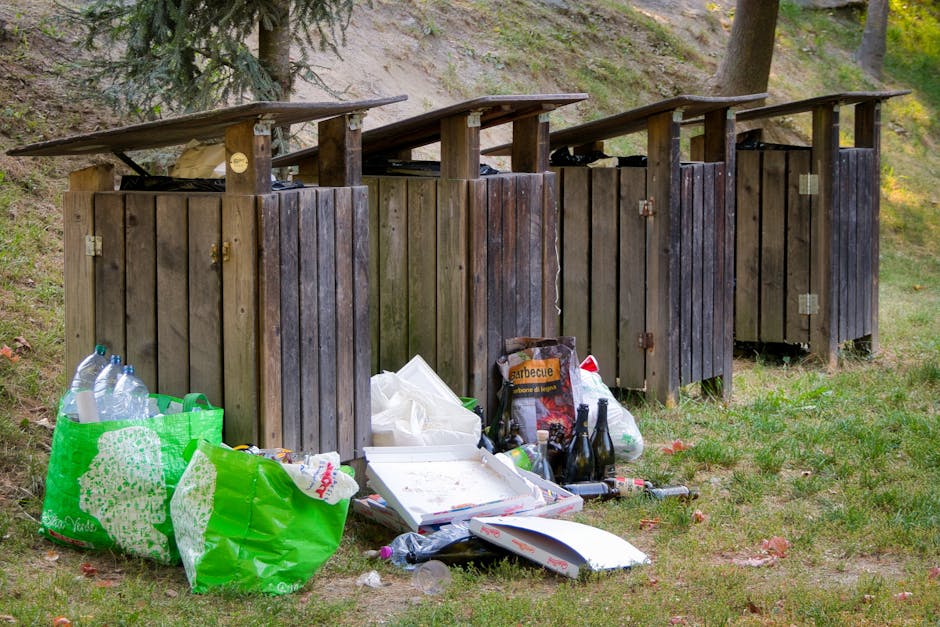
Most bulky waste collection problems are boringly predictable. That is actually a good thing, because predictable problems are avoidable.
- Guessing the size. "It'll fit" is not a measurement.
- Forgetting access restrictions. No stopping space outside? Mention it early.
- Leaving loose parts everywhere. Screws, panels, drawers and cushions all need a plan.
- Not checking if disassembly is needed. Some items must come apart before they can go.
- Mixing in unwanted waste. Bulky waste and general rubbish are not always treated the same way.
- Assuming collection means loading from anywhere. Some services are curbside only. Others are inside-only. Quite different jobs, really.
- Booking without checking the final price structure. Hidden costs often appear when the original description was too vague.
- Leaving it to the last day of a tenancy or move. That is how small problems turn into stressful ones.
One easy example: a resident in a top-floor flat books removal for "three items". On arrival, those three items turn out to be a wardrobe that needs dismantling, a filing cabinet with no lift access, and a bed frame bolted together with old fittings. Suddenly the job is slower and more expensive than expected. None of that is unusual. It just wasn't mentioned.
Tools, resources and recommendations
You do not need a special toolkit, but a few simple things make life easier.
- Measuring tape: Essential for doorways, corridors and item dimensions.
- Phone camera: A few clear photos can save a long back-and-forth.
- Basic screwdriver or Allen key set: Useful for simple disassembly where safe and appropriate.
- Protective gloves: Good for moving loose parts or dusty items.
- Sticky labels or tape: Handy if you want to mark what stays, what goes, and what must not be touched.
- Waste separation bags or boxes: Practical for small items that would otherwise get lost in the shuffle.
On the planning side, these pages can help you understand the wider service picture before booking: the services overview, recycling and sustainability guidance, and pricing and quote information. If you want to know more about the company background and service approach, about us is also worth a look.
For local households with furniture-heavy clearances, it can be especially helpful to compare with related jobs such as furniture disposal in Islington or house clearance support. If you are dealing with an attic or storage space, loft clearance may be the closer fit.
Law, compliance, standards, or best practice
Bulky waste is one of those areas where best practice matters just as much as convenience. In the UK, waste should be handled by appropriate parties, and you should always be careful about who removes it and where it ends up. If a service is arranging disposal on your behalf, it is sensible to expect professional handling, proper transport, and responsible sorting.
That said, you do not need to turn into a compliance expert. A few plain-English checks are enough:
- Use a provider that explains how waste is collected and handled.
- Make sure items are not left in unsafe communal areas.
- Do not dump bulky waste on the pavement unless a collection arrangement specifically allows it.
- Be careful with electrical items, sharp parts, or anything contaminated.
- Keep records of what was collected if the clearance is tied to a move, tenancy, or property handover.
Good practice also means being transparent about access and item type. That helps the collector plan properly, which in turn reduces the chance of damage or delay. It sounds mundane, but mundane is usually where the good outcomes live.
If your collection is tied to a property change, it can be useful to read a local property-related piece such as buying homes in Islington or how to buy real estate in Islington, especially if you are clearing a place before sale or letting. For broader local context, how good Islington is for living, ask a local gives a sense of the everyday housing environment that shapes access and storage challenges.
Options, methods, or comparison table
If you are unsure which route is best, compare the main options against your situation rather than just the price.
| Method | Best when | Pros | Watch-outs |
|---|---|---|---|
| Council-style bulky collection | You have a small number of standard items and can wait for a slot | Simple for straightforward jobs, often familiar process | May be less flexible with access, item types and timing |
| Private bulky collection | You need flexibility, lifting help, or faster turnaround | More adaptable, often better for awkward access and multiple items | Needs accurate information to avoid extra cost or delay |
| DIY drop-off or transport | You have a suitable vehicle and can lift safely | Direct control, potentially useful for small loads | Parking, labour, unloading and disposal rules can become a faff |
For most N7 households, the deciding factor is not simply "which is cheapest?" It is "which option prevents me from dealing with the same item twice?" If the answer is private collection because the stairwell is tiny and the sofa is huge, that's not overkill. That's just sensible.
If you are comparing disposal routes because you also have mixed waste, you might find rubbish collection in Islington a useful general reference point, and waste clearance in Islington gives a broader view of how larger clearances are approached.
Case study or real-world example
A typical N7 scenario goes like this. A resident in a second-floor flat wants to remove an old sofa, a broken bookshelf and a mattress before new flooring is fitted. The first instinct is to just book a collection and hope for the best. But the building has a narrow stair bend, no lift, and a controlled parking bay outside. That combination is where many bulky waste jobs get awkward.
Instead of guessing, the resident measures the sofa depth, checks the stair turn, and sends photos of the hallway and front entrance. They also note the collection needs to happen at a time when the parking bay is available. The provider can then plan for the right vehicle, the right crew size and the right timing.
The result is boring in the best possible way. The items are removed without damage, nobody is left carrying a heavy sofa halfway down the stairs only to discover it will not turn the corner, and the resident avoids a second booking. No drama. No dented wall. No awkward apology to the downstairs neighbour who was just trying to enjoy a quiet Tuesday afternoon.
That example is simple, but it shows the pattern: good information prevents most bulky waste collection problems in N7. The item matters, of course. But the route out of the property matters just as much.
Practical checklist
Use this before you book:
- Have I listed every bulky item, including small extras?
- Have I measured the largest item and the route out?
- Have I checked stairs, lifts, corridors and doorway widths?
- Have I noted parking, loading or access restrictions?
- Do I know whether the item needs dismantling first?
- Have I separated reusable items from waste?
- Have I told the provider about weight, condition, and any contamination?
- Have I confirmed who will provide access on the day?
- Have I cleared the route and protected floors if needed?
- Do I understand the collection method and any likely extra costs?
If you can tick most of those off, you are already ahead of the game.
Get a free quote today and see how much you can save.
Conclusion
Bulky waste collection problems in N7 usually come down to a handful of predictable issues: bad measurements, poor access planning, vague booking details, and leaving things too late. Once you address those, the whole process becomes much easier. You do not need perfect conditions, just a bit of preparation and the right expectations.
If you're dealing with one awkward item or a full clear-out, start with the basics: measure, photograph, describe, and confirm. That alone prevents a surprising number of headaches. And if the job feels larger than it first looked, that's not a failure. It's just a sign that the route needs a better plan.
Do it once, do it neatly, and you'll thank yourself later when the space is clear and the room finally breathes again.
 Tipper Van - Rubbish Removal and Waste Clearance Prices in Islington, N1
 Luton Van - Rubbish Removal and Waste Clearance Prices in Islington, N1

