

Commercial rubbish removal Holloway Road and Upper Holloway
Posted on 05/06/2026
Commercial rubbish removal Holloway Road and Upper Holloway: a practical guide for local businesses
If you run a shop, office, cafe, studio, or trade business near Holloway Road or in Upper Holloway, rubbish has a way of building up quietly until it becomes a proper headache. One day it is a few cardboard boxes and broken chairs. The next, it is a back room nobody wants to open. Commercial rubbish removal Holloway Road and Upper Holloway is really about keeping business space safe, usable, and presentable without turning your working day into a skip-filled mess.
This guide walks through how local commercial waste removal works, what to expect, what to avoid, and how to choose a service that fits your schedule and your type of waste. We will also cover practical compliance points, useful service options, and a few real-world details that matter more than people think. Truth be told, waste removal is rarely exciting. But when it is done well, everything else runs more smoothly.

Why Commercial rubbish removal Holloway Road and Upper Holloway Matters
Holloway Road is busy, and Upper Holloway has that constant London mix of homes, independent businesses, trades, takeaway spots, offices, and small service firms. That density is great for trade, but it also means waste can stack up fast. Deliveries arrive. Packaging accumulates. Old fixtures get replaced. Refits happen. And if nobody clears the debris properly, the space starts to feel cramped, untidy, and a bit chaotic.
For businesses, rubbish is not just a tidiness issue. It affects safety, customer impression, workflow, and sometimes even your obligations under duty-of-care style expectations for waste handling. A cluttered back office can slow staff down. Waste left in shared yards can create access problems. On a narrow street, it can also get in the way of neighbours, bins, loading, and passers-by. Not ideal, to put it mildly.
Local waste clearance is especially useful in this area because commercial premises often need flexible timing. You may need an early collection before opening, a fast same-day clear-out after a refit, or a quieter off-peak visit so you are not disrupting customers. That sort of practical coordination matters more than the big promises on a website.
Expert summary: If your business produces mixed waste, bulky items, or one-off clearance loads, the real value of commercial rubbish removal is not just taking things away. It is keeping your premises safe, workable, and presentable without wasting your own staff time.
If you are exploring the wider local service picture, it can help to review the services overview first, then match the right type of clearance to your site and workload.
How Commercial rubbish removal Holloway Road and Upper Holloway Works
At a practical level, commercial rubbish removal follows a simple pattern: you describe what needs clearing, the provider estimates volume and access, then the waste is collected, sorted, and taken away for lawful disposal or recycling. Simple enough. The tricky part is the detail.
For a small office, the job may be straightforward: desks, chairs, archive boxes, monitors, and general office clutter. For a construction firm or property manager, the waste can be more varied: timber offcuts, plasterboard, packaging, fixtures, broken fittings, and mixed debris. A good provider will ask the right questions before arriving, not after the van is half loaded and everyone is standing around wondering where the other mattress came from.
Collections in commercial areas often work best when the site access is clear. That means knowing whether there is roadside loading, whether a rear yard is accessible, whether stairs are involved, and whether parking restrictions may affect timing. In busy corridors like Holloway Road, the smoothest jobs are usually the ones where the client sends a few photos in advance and is honest about the amount of waste. Makes life easier for everyone.
If the waste includes furniture, office fixtures, or mixed bulky items, you may want to cross-check the right specialist service. For example, office clearance support is more suitable for workspaces, while furniture disposal helps when the load is mainly chairs, desks, shelving, or reception items.
For businesses that deal with recurring waste, there is also a big difference between one-off clearance and ongoing collection. A one-off visit is often best after a refurbishment, relocation, or tenancy handover. Ongoing collection suits shops, hospitality, shared workspaces, and premises that produce predictable rubbish every week or month. If your waste pattern is steady, regular rubbish collection in Islington may be more efficient than repeatedly booking ad hoc clearances.
Key Benefits and Practical Advantages
The biggest benefit is obvious: a clear space. But the real value goes deeper than that.
- Better use of space: A back room full of broken stock cages or old desks is dead space. Clearing it gives you storage, breathing room, or a better working layout.
- Reduced trip hazards: Loose packaging, shattered fittings, and stacked waste are a genuine safety issue, especially for busy staff or customers moving through narrow areas.
- Improved first impressions: In a commercial street, tidy premises quietly signal competence. Customers notice more than you think.
- Less staff disruption: Your team should be running the business, not hauling old shelving down stairs at 4 p.m. on a Friday.
- More reliable disposal: A reputable service should separate waste responsibly and handle disposal channels properly, rather than dumping everything into one mixed pile.
- Flexibility: Good operators can often work around opening hours, access limits, and awkward building layouts.
There is also a quieter benefit that gets overlooked: peace of mind. Once the waste is sorted, the space feels lighter. You can think better. Staff can move better. Even the room sounds different, in a way. Less echo, less clutter, less pressure. A small thing, perhaps, but not really small when you are trying to run a business.
For businesses that care about environmental practice, it helps to look at providers who are open about recycling and segregation. You can read more about the approach on the recycling and sustainability page.
Who This Is For and When It Makes Sense
Commercial rubbish removal is not just for large offices. In fact, most enquiries from places like Holloway Road and Upper Holloway tend to come from smaller operations that simply need a quick, reliable solution.
It makes sense if you are:
- a shop owner clearing packaging, displays, or old stock
- a landlord or property manager dealing with abandoned items after a tenancy
- an office manager replacing furniture or clearing archived materials
- a cafe, takeaway, or hospitality venue removing bulky waste from a refit
- a tradesperson needing builders waste or site clutter taken away
- a studio, salon, or clinic removing redundant equipment and fixtures
There are some nearby situations where local knowledge matters as well. A business tucked off a busy road may have limited access. A site near residential buildings may need quieter timing. A unit above ground floor may need extra manpower. These details sound minor until the van turns up and there is nowhere sensible to park. Then they become very major, very quickly.
If the waste came from a refurbishment or strip-out, the right approach may be a specialist builders waste disposal service. For mixed business premises that are closing, rebranding, or moving on, waste clearance in Islington can provide a broader option.
It is also worth checking whether some items need careful handling. Office electronics, sharp waste, confidential paper, and items contaminated by food or liquids should not be treated casually. If in doubt, ask before collection. That one conversation can save a lot of faff.
Step-by-Step Guidance
Here is the cleanest way to organise a commercial clearance without making your day harder than it needs to be.
- List the waste types. Separate furniture, general rubbish, builders waste, electrical items, and anything unusual. A mixed load is normal, but it helps to know what is in it.
- Estimate the volume. Is it a few bulky pieces, half a van load, or a full clearance job? Photos usually help more than long explanations.
- Check access. Note stairs, lifts, narrow doorways, loading restrictions, and whether parking is likely to be difficult.
- Choose a suitable time. Before opening, after closing, or at a quieter point in the day can make all the difference.
- Confirm what is included. Ask whether loading, lifting, sorting, and disposal are all covered, or whether the quote only covers collection.
- Prepare the waste area. If possible, move items to one spot so the team can work quickly and safely.
- Keep sensitive materials separate. That includes confidential documents, personal data, and anything you would not want mixed in a general load.
- Review the end result. Once the waste is gone, do a quick check of corners, cupboards, and storage areas. People miss the odd cable or box all the time.
A small aside: the best clearances are usually boring in the best possible way. No drama. No confusion. Everyone knows where the waste is, what is being taken, and what remains behind. That is the goal.
Expert Tips for Better Results
There are a few habits that consistently make commercial waste removal easier and cheaper in practice.
1. Group similar items together. Furniture in one area, cardboard in another, builders waste separate if you can manage it. Sorting on site may reduce delays and avoid confusion.
2. Take quick photos from more than one angle. One photo of a pile rarely tells the full story. Side views, a wider shot, and a picture of access points help more than people expect.
3. Don't bury awkward items at the bottom. If there is a heavy cabinet or awkward item mixed in, say so early. Hidden surprises are never welcome when a crew is loading a van.
4. Think about timing with neighbours and customers. In a busy street, a quieter slot is often more considerate and more efficient. You do not want waste moving to compete with your busiest footfall period.
5. Use the clearance as a reset. Once the clutter is gone, tidy cables, label storage, and review how waste builds up. It is a decent moment to improve the layout, not just empty it.
6. Ask about recycling upfront. If your business wants a better environmental outcome, say so. It helps the team plan sorting more carefully.
7. Keep proof of what was removed. For businesses with landlords, managing agents, or internal compliance processes, a simple record of the clearance can be useful later.
If you are weighing up pricing, the pricing and quotes page is a sensible starting point for understanding how quotes are usually approached.
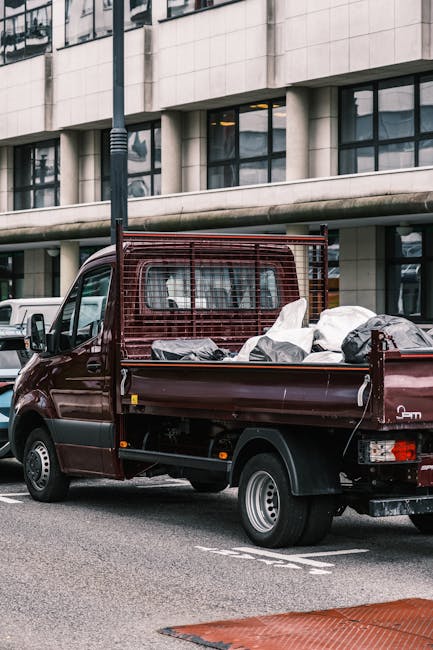
Common Mistakes to Avoid
Commercial waste jobs often go wrong for the same handful of reasons. The good news is that most of them are easy to avoid.
- Being vague about the load: Saying "just a bit of rubbish" is rarely enough. A clearer description saves time and avoids the wrong vehicle arriving.
- Forgetting access issues: If a van cannot park nearby, or items must come down several flights, the job changes fast.
- Mixing special waste with general waste: Electronics, sharp items, and contaminated materials may need separate handling.
- Waiting until the space is unusable: Clearing waste earlier is nearly always less stressful than waiting for a full-blown bottleneck.
- Assuming every provider works the same way: Some are set up for office clearance, others for builders waste, others for bulky domestic-style loads. Fit matters.
- Not checking insurance and safety approach: If the team is lifting through tight stairwells or shared entrances, you want confidence they know what they are doing.
Another common slip is over-ordering the wrong type of service. A cafe clearing three chairs and some shelves does not need the same arrangement as a large office move. Matching the job to the service keeps things lean, which is what you want. No one enjoys paying for capacity they never use.
Tools, Resources and Recommendations
Good commercial rubbish removal is not really about fancy equipment. It is about the right setup. Still, a few practical tools and resources make the process easier.
- Phone photos: The easiest way to show volume and access.
- Labels or tape: Handy for marking what should stay, go, or be moved elsewhere.
- Bins or sacks: Useful for separating smaller waste before the team arrives.
- Basic measuring tape: Helps if you are unsure whether bulky items will fit through doorways or lifts.
- Internal clear-out list: Particularly helpful for offices, shops, or premises with multiple staff.
From a service perspective, it helps to know the difference between general rubbish removal, specialised office clearance, and more focused services like house clearance, loft clearance, or garden waste removal. Even if you are a business, these pages can help you understand how different waste categories are usually handled.
If you are simply trying to understand the area and the sort of local context businesses operate in, the broader guides such as Islington area guide and the Angel and Upper Street rubbish removal guide can be useful background reading. They are not waste manuals, obviously, but they do help you understand local rhythms, footfall, and access patterns.
Law, Compliance, Standards, or Best Practice
Waste removal for businesses in the UK is not just about convenience. There are basic expectations around responsible waste handling, and commercial clients should think carefully about who is collecting their rubbish and how it is being managed.
Without getting over-technical, the safest approach is to use a provider that can explain how waste is loaded, separated, transported, and disposed of. Businesses should also be mindful of their own record-keeping, especially when the waste includes equipment, documents, or larger clearance loads from premises they control.
Some useful best-practice principles are straightforward:
- keep hazardous or unusual waste separate unless the provider confirms it can be handled
- avoid leaving waste in communal areas longer than necessary
- make sure the collection is planned around access and safety
- retain basic details of the service for your own records
- ask about insurance where lifting, stairs, or tight access are involved
It is also sensible to review a provider's trust pages before booking. For example, the site's insurance and safety information, terms and conditions, and about us page can give you a clearer picture of how the business operates. If payment handling matters to you, payment and security is worth a look too.
One more practical note: if you have any concerns about modern slavery risks in supply chains or waste-handling labour standards, it is reasonable to review a provider's modern slavery statement. It is a quiet but meaningful trust signal.
Options, Methods, and a Comparison Table
There is no single best way to handle commercial waste. The right option depends on how much rubbish you have, how quickly it needs to go, and how much disruption you can tolerate.
| Method | Best for | Strengths | Limitations |
|---|---|---|---|
| One-off commercial rubbish removal | Refits, closures, bulky clear-outs, sudden excess waste | Fast, flexible, ideal for mixed loads | Less efficient if waste is constant and predictable |
| Ongoing rubbish collection | Shops, cafes, offices, recurring waste streams | Regularity, easier planning, fewer build-ups | May not suit sudden large clearances |
| Specialist clearance service | Office moves, furniture-heavy jobs, builders waste | Better matched to the waste type | May need more specific preparation |
| In-house removal by staff | Very small volumes only | Can seem cheaper at first | Time-consuming, riskier, often not the real bargain |
To be fair, in-house removal is tempting when the pile looks small. But once you factor in staff time, lifting effort, vehicle use, parking, and disposal uncertainty, the maths often changes. Not always, but often enough.
Case Study or Real-World Example
Here is a realistic local example. A small office near Holloway Road had been operating with a few spare desks, two broken filing cabinets, a pile of cardboard, and assorted old equipment stored in a rear room. Nothing dramatic. Just one of those spaces that slowly becomes the place where everything ends up.
The team wanted the room cleared before a new layout was installed. The main complications were limited parking, a narrow internal route, and a need to avoid disturbing staff working nearby. They took photos, grouped the waste into sections, and booked a collection for early morning. That mattered more than anything else, because the corridor was quieter and the collection team could work without interrupting customers or phone calls.
What made the job go well?
- the waste was described clearly in advance
- the client flagged access restrictions early
- the load included mixed items, so the provider planned for sorting
- the office staff moved sensitive papers away beforehand
The result was simple: the room became usable again, the office layout improved, and nobody spent half a day dragging furniture through a tight corridor. Nothing glamorous, but genuinely useful. And that is the point.
Practical Checklist
Use this quick checklist before booking commercial rubbish removal in Holloway Road or Upper Holloway:
- Have I identified the main waste types?
- Have I estimated the amount as clearly as possible?
- Did I take photos of the waste and the access route?
- Have I checked whether there are stairs, lifts, or parking limits?
- Do I know whether the collection needs to happen before opening or after closing?
- Have I separated confidential, sharp, or unusual waste?
- Do I know whether I need office clearance, builders waste disposal, or general rubbish collection?
- Have I reviewed insurance, safety, and terms information?
- Have I checked how payment and quotes are handled?
- Have I planned a quick post-clearance tidy-up?
If you can tick most of those off, the collection is likely to run far more smoothly. Simple, really.
Get a free quote today and see how much you can save.
Conclusion
Commercial rubbish removal Holloway Road and Upper Holloway is about more than hauling waste away. It helps businesses keep their premises safe, compliant, and presentable while protecting staff time and reducing disruption. In a busy part of Islington, that practical edge matters. A lot.
The best results usually come from being clear about the waste, honest about access, and realistic about timing. Choose the right type of service, ask sensible questions, and look for a provider that understands the difference between a quick bulky collection and a full commercial clearance. That little bit of care upfront pays off later.
And once the clutter is gone, the room often feels better than you expected. Cleaner. Calmer. Easier to work in. Sometimes that is all a business needs to feel back on track again.

 Tipper Van - Rubbish Removal and Waste Clearance Prices in Islington, N1
 Luton Van - Rubbish Removal and Waste Clearance Prices in Islington, N1

